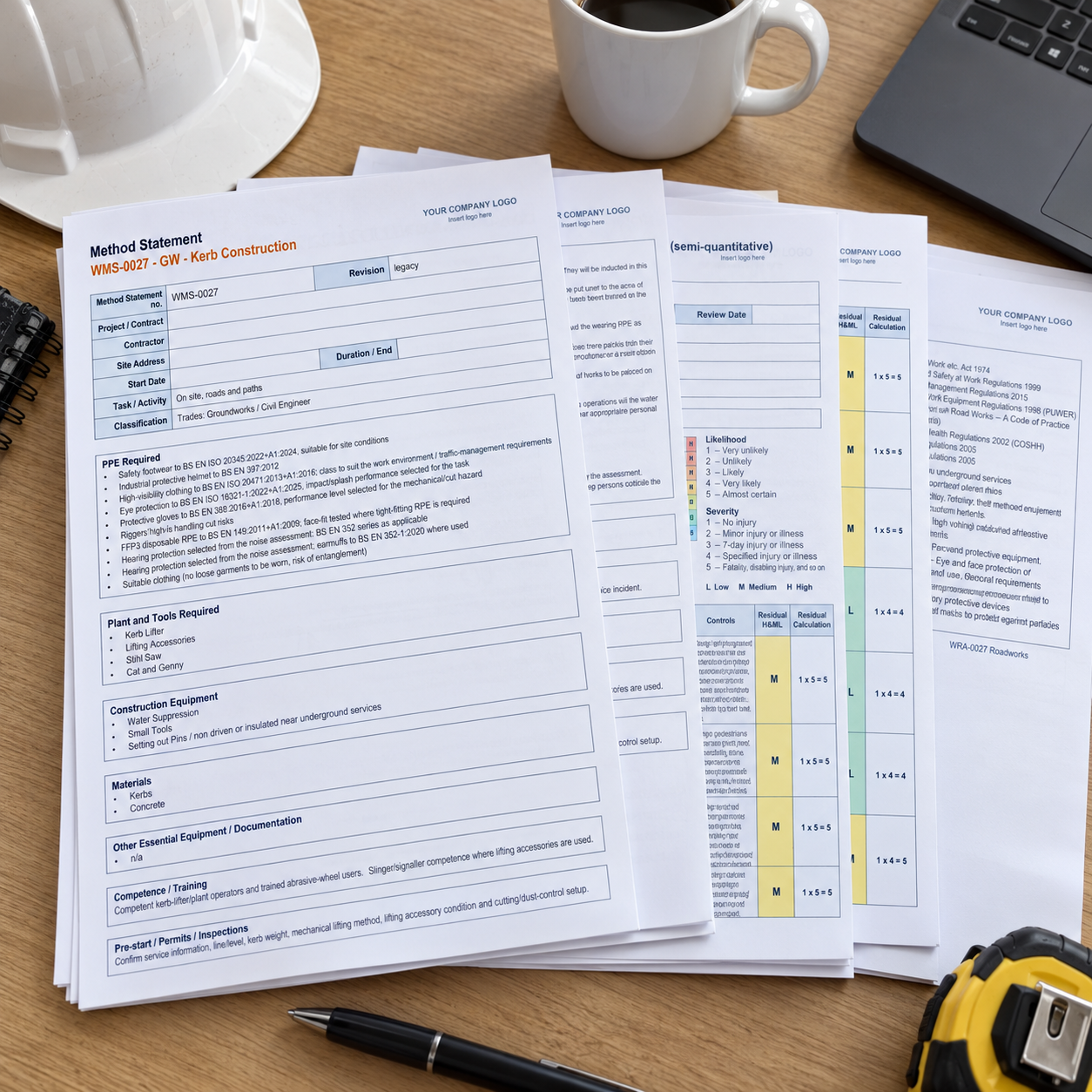
A risk assessment identifies the hazards associated with an activity, evaluates the risks and sets out the controls required to reduce those risks. A method statement explains how the work will actually be carried out safely, including the sequence of work, responsibilities, equipment, precautions and relevant control measures. The two documents are often used together as part of a RAMS package.
A Method Statement should clearly explain how the work will be carried out, in what sequence and by whom. It should reflect the actual activity, site conditions, plant and equipment being used and the competence required for the work.
Depending on the task, a suitable Method Statement may include:
- Scope of work
- Sequence of operations
- Access and egress arrangements
- Plant, tools and equipment
- Competence and training requirements
- Personal protective equipment
- Emergency arrangements
- Environmental controls
- Interface with other contractors or trades
- Supervision and monitoring
- Permit requirements
- Relevant risk assessment controls
Where Method Statements form part of a RAMS package, Wooltown Safety Services can ensure the work sequence is consistent with the associated risk assessments, COSHH assessments and project controls.
They should be prepared by a competent person with sufficient knowledge of the activity, often in consultation with site management and supervisors. They should take account of factors such as plant and equipment, site and environmental conditions, worker competence, emergency arrangements, collective protection measures and PPE.
Wooltown Safety Services provides bespoke Method Statements tailored to the specific activity, site conditions and operational requirements.